
Non-surgical treatments
FILLERS
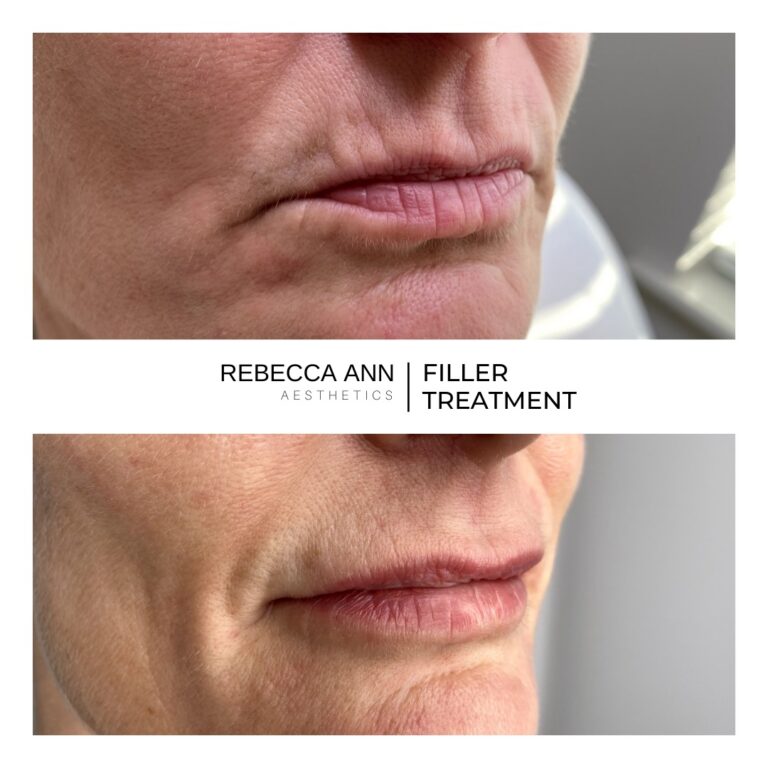
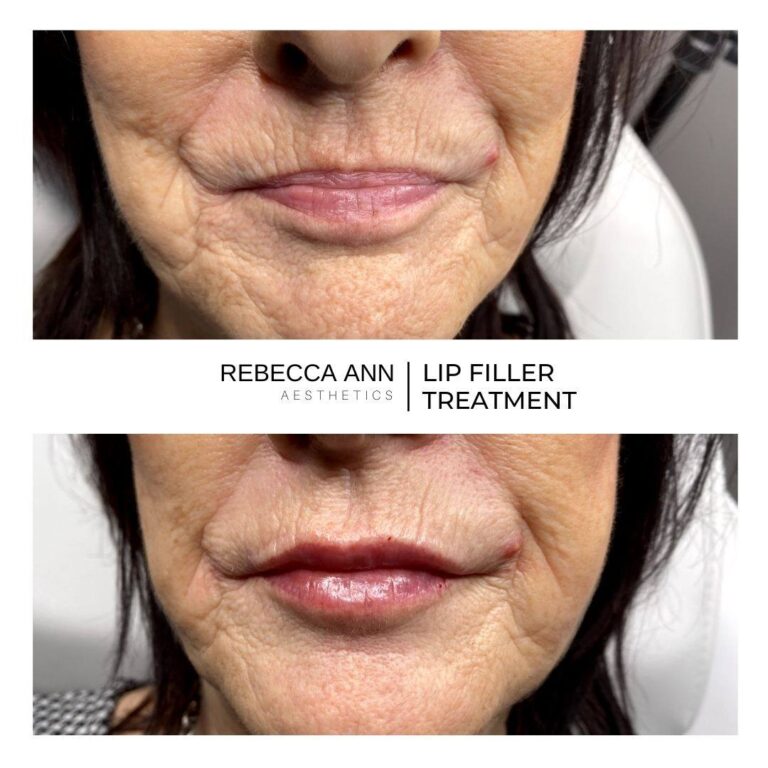
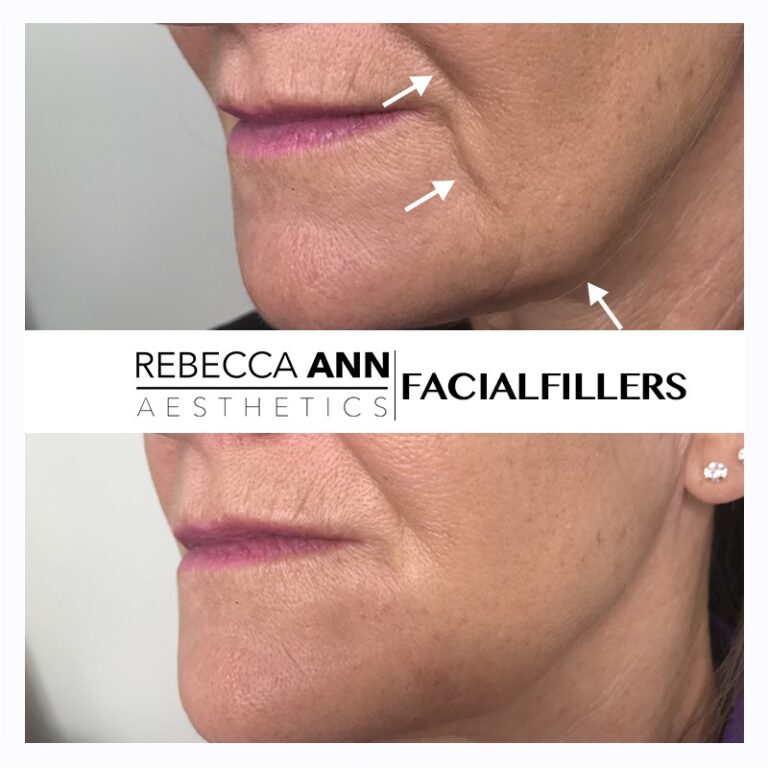
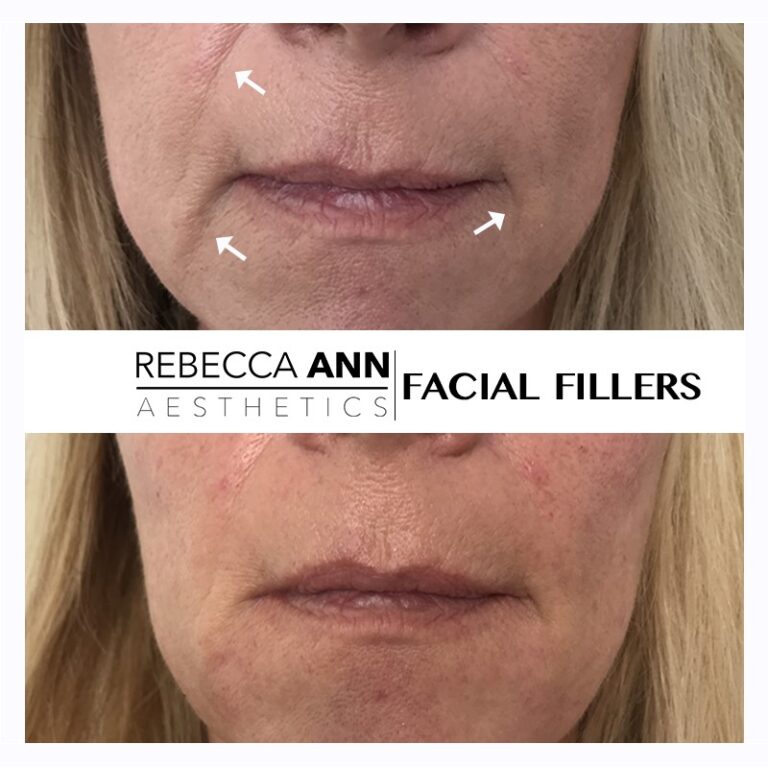
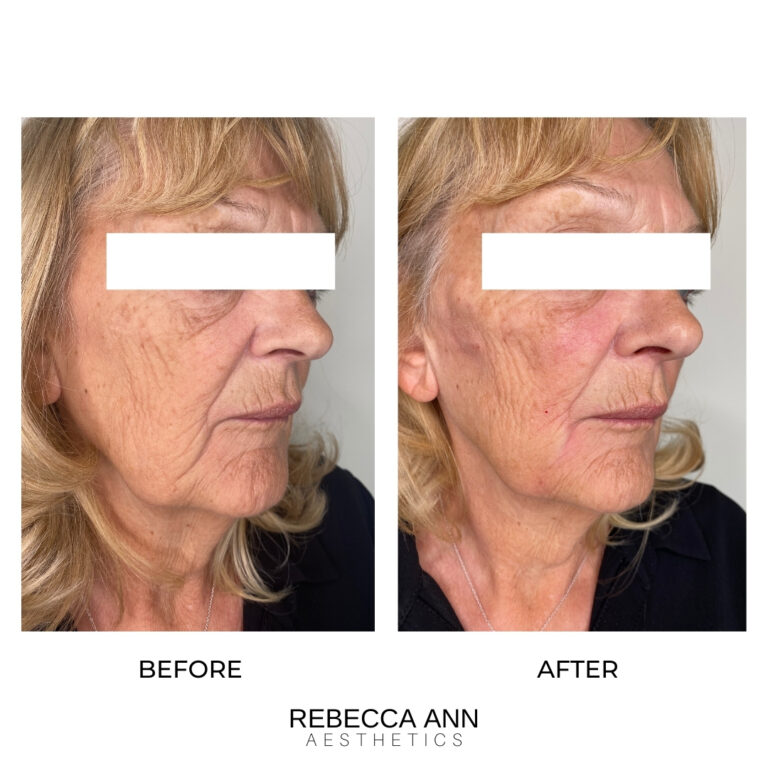
Dermal Fillers are used to restore volume and plumpness to the face, improve the appearance of ageing skin, add contour to cheeks, jawline and chin, plump the lips, and much more. At the Rebecca Ann Aesthetics, market leading brand, such as Juvederm is used to ensure safety and long lasting, natural looking results that you will love.
About FILLERS
Dermal Fillers are a popular non-surgical treatment designed to restore lost volume, enhance facial features, and soften signs of ageing. Using hyaluronic acid-based products like Juvederm, fillers can plump the lips, define cheekbones, smooth wrinkles, and sculpt the jawline — all with natural-looking results. At Rebecca Ann Aesthetics, your comfort and safety are prioritised through a personalised consultation and a tailored treatment plan. Whether you’re after subtle tweaks or full rejuvenation, our expert techniques ensure long-lasting, beautiful results with minimal downtime.
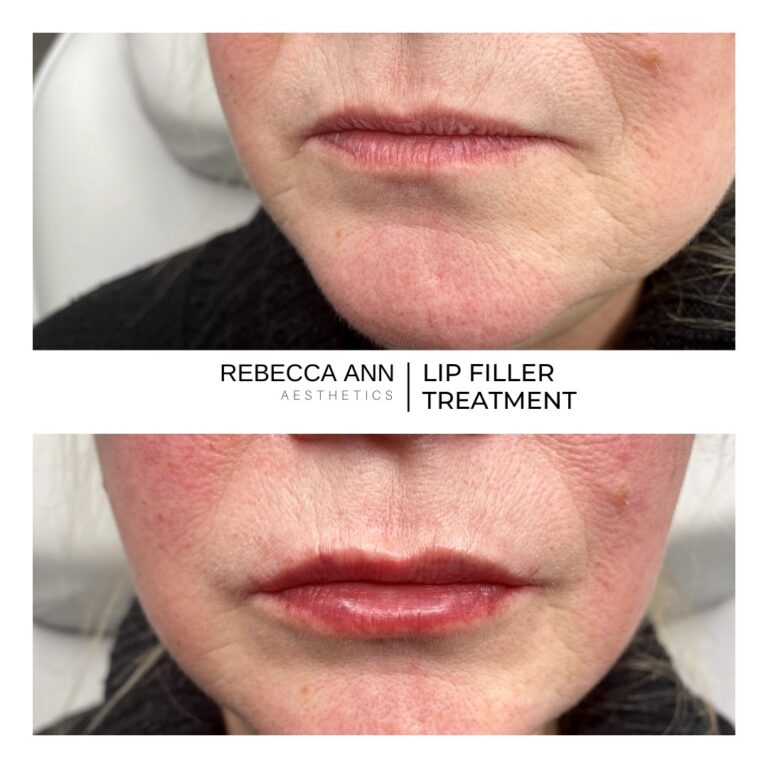
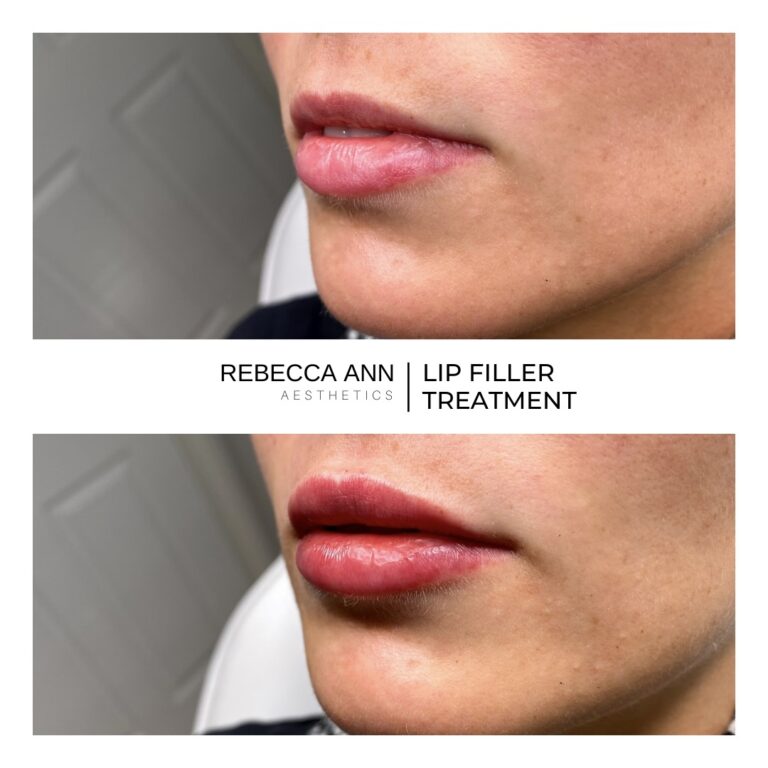
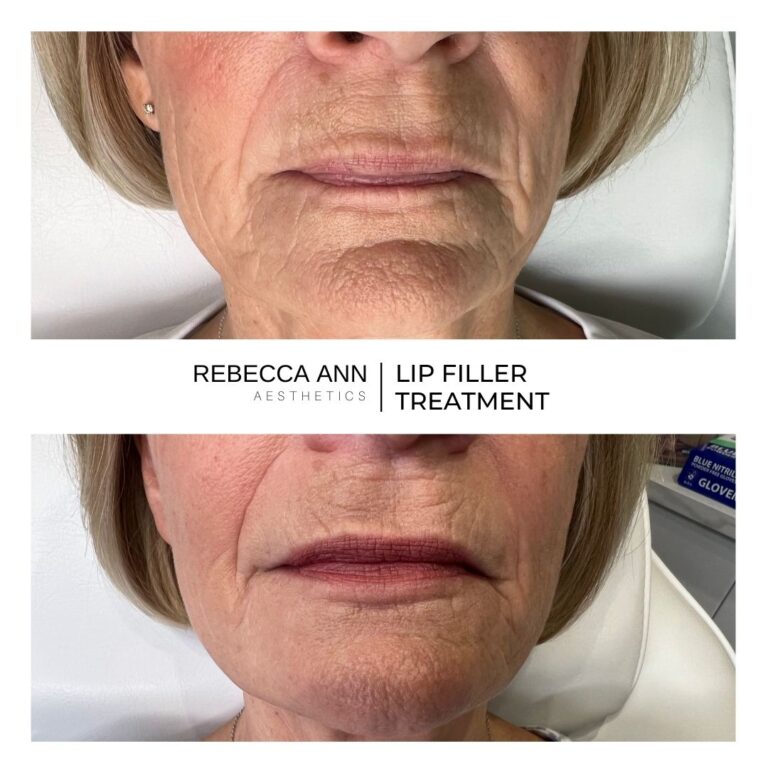
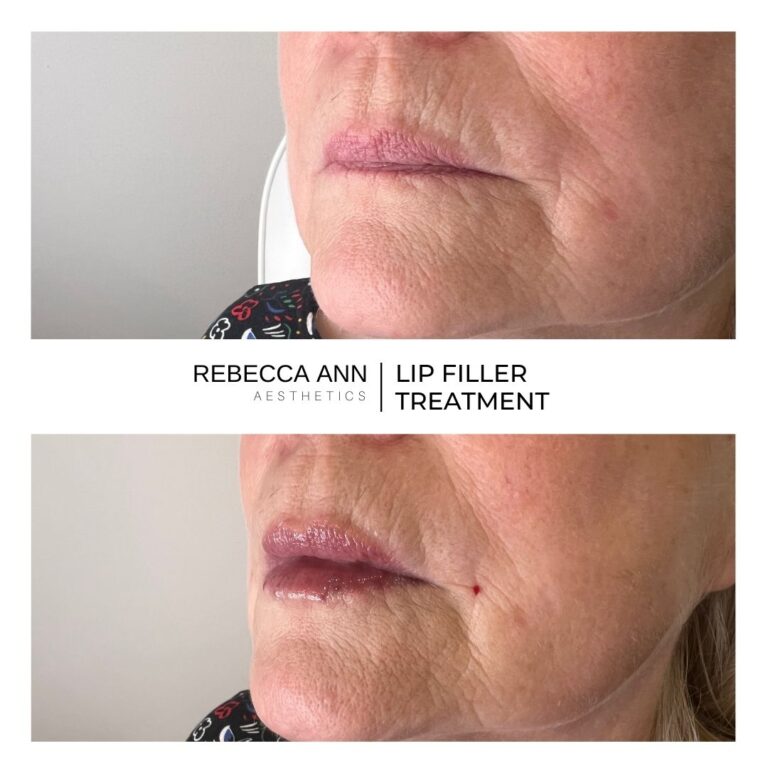
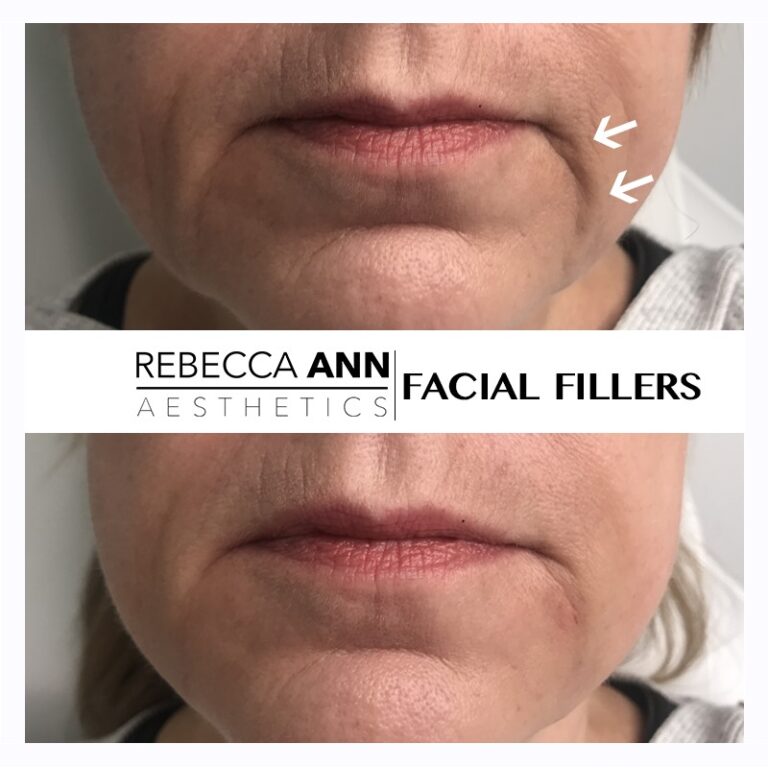
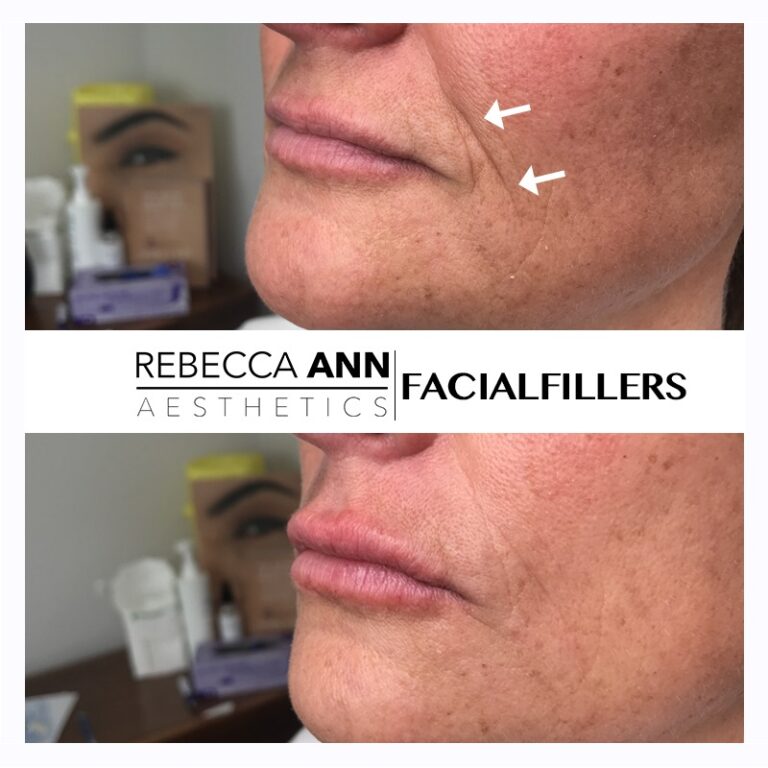
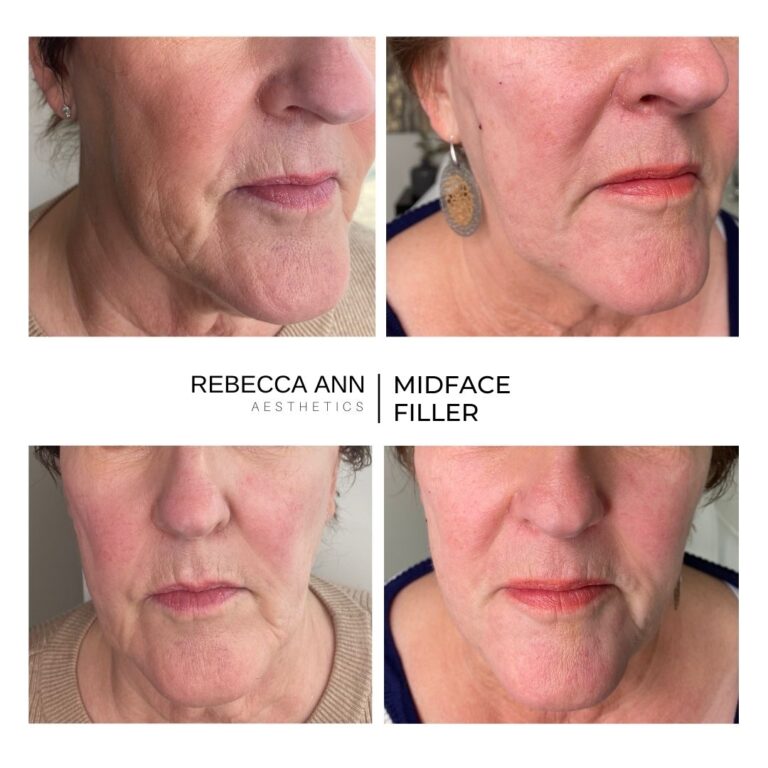
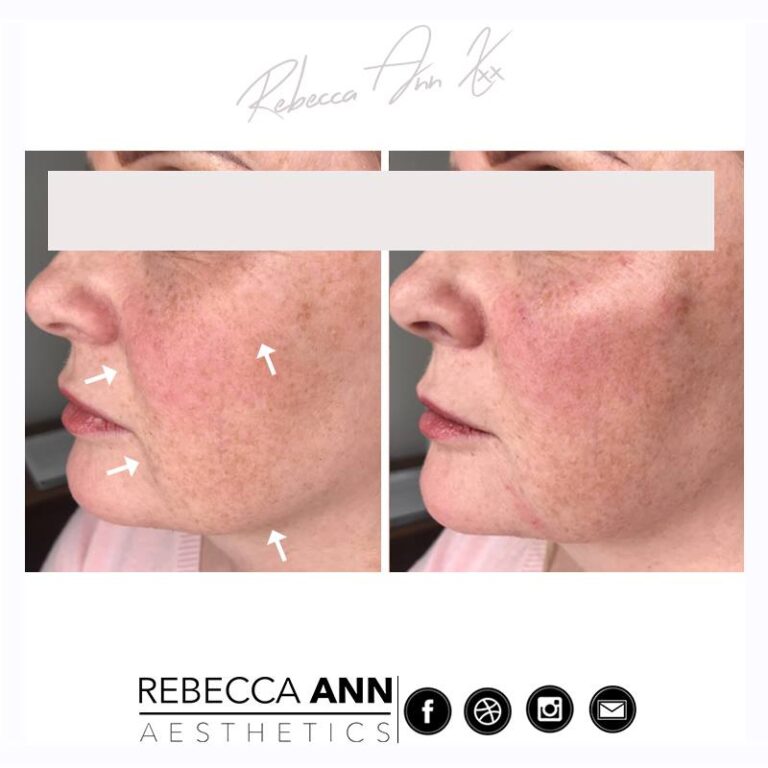
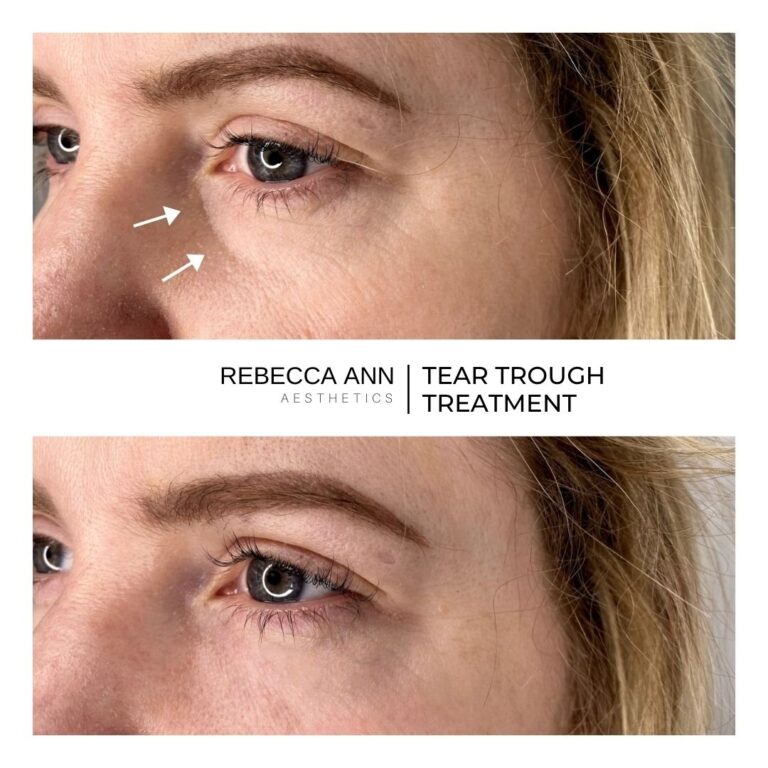
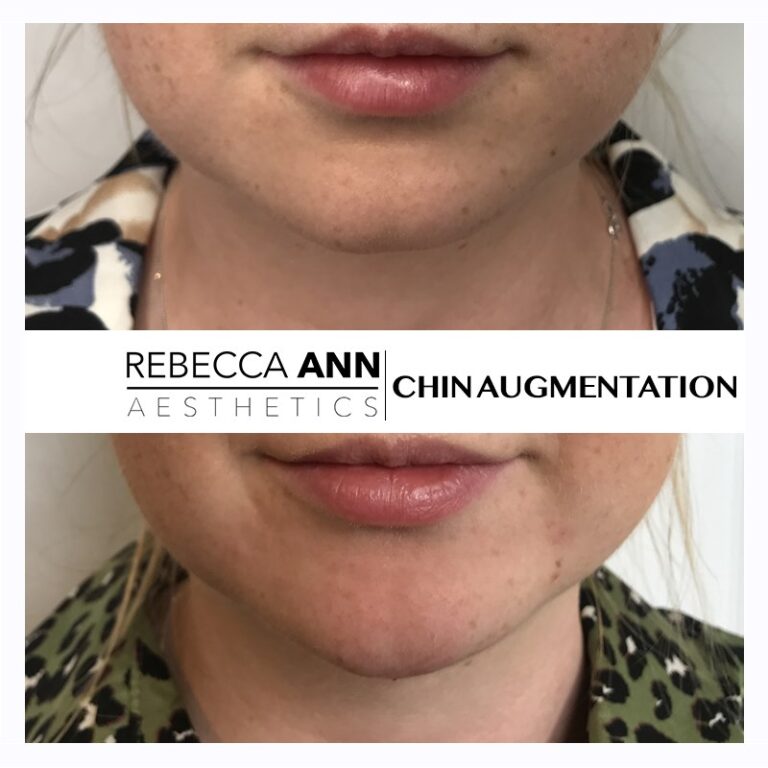
How it Works
Fillers work by replacing lost volume, adding support and structure to the skin and reshaping the contours of the face. Fillers contain hyaluronic acid; a hydrating substance found naturally in the body. The synthetic form used in filler is safely and effectively injected, replacing lost volume. This can also smooth away facial wrinkles and folds, shape contours, plump lips and much more.
At Rebecca Ann Aesthetics, the world’s leading brand of hyaluronic acid filler is used. Juvederm has undergone extensive research and strict clinical trials to ensure that your treatment is safe, natural looking, long-lasting and delivers optimum results.
Whether you are looking for complete facial rejuvenation or just a subtle ‘tweak’ Rebecca has the skills and experience to help you achieve your goals. During your consultation, your options will be discussed to work in partnership with you to create a bespoke treatment plan to address your individual needs, expectations and budget.
YOUR TREATMENT
Before any treatment you will have a consultation to assess your suitability, desired outcome and budget, before a treatment plan is recommended.
The treatment time varies depending on what areas are being treated but should be no longer than around 45 minutes. You may feel some mild discomfort but this should be minimal and short-lived.
You will normally see the results immediately, although there may be some initial swelling so it’s best to wait a few days to see the actual result. The treatment will usually last around 9-12 months depending on the area being treated and the product being injected.
You will be provided with aftercare advice to ensure that the treated area heals well and your results are the best they can be.


Had Botox waited to see results which I’m really pleased with, didn’t need a top up either. Went on a recommendation and I’m so happy I did


have a question?
Quick answers to questions you may have
Can fillers be dissolved or removed?
When fillers are used in experienced and talented hands they can provide amazing natural results. They shouldn’t really need to be dissolved unless it’s medically necessary.
Hyaluronic acid fillers, once injected can take around 6-12 months to dissolve naturally which is down to an enzyme in the body. If you have fillers and decide you really don’t like them they can be reversed by using an enzyme called Hyaluronidase. This can be injected directly into the lips or other facial area and can take effect almost straight away or up to 4 days. However, there is a very small risk of an allergic reaction which must be considered before carrying out the procedure. I would always advise my patients to allow their fillers to wear off naturally if possible.
How can you achieve a natural look with filler?
Dermal fillers are one of the most popular types of non-surgical procedure. Worldwide, over 10 million procedures are carried out per year and the number is rising.
Unfortunately, the media is filled with celebrities described as having ‘trout pout’, ‘duck lips’, ‘pillow face’ and looking puffy. Dermal fillers do not need to have these labels when the procedure is done correctly and artistically.
Dermal fillers can help to contour the cheeks, enhance the jawline with an attractive angle and give your lips the perfect pout.
A good, natural filler result starts with a correct, detailed assessment. Problems arise when a practitioner overfills the face. Going beyond the point of beautification can end in the ‘pillow face’ appearance. Firstly, your medical practitioner will take time to assess your face, giving a thorough assessment as part of your consultation before undertaking any procedure. The dimensions of the face will be assessed, working out where to place the filler to replace lost volume.
The art to a natural look is also choosing the right dermal filler. Some fillers are of a much greater quality than others. A good medical practitioner will know the different qualities of each type of filler, using the correct type for the correct area of the face to achieve the set goal.
Filler placement is also very important in achieving a natural look. Every medical practitioner should have the techniques, experience and skill to achieve perfect placement of the filler and therefore providing a natural result.
Which areas of the face can be treated with filler?
Facial fillers can be used in most areas of the face to contour, lift, project, define and refresh as well as smooth and lift lines and wrinkles.
The below are the areas of the face that can be treated by filler.
Lips. Different types of filler and different volumes can be used to add definition, hydration and volume.
- Nasolabial lines (nose to mouth lines)
- Perioral lines (vertical lip lines/smoker’s lines)
- Cheeks. The best place to begin with fillers which can improve lower face aging.
- Chin. Filler can be used to augment a receding chin which can help to balance the side profile and treat volume loss
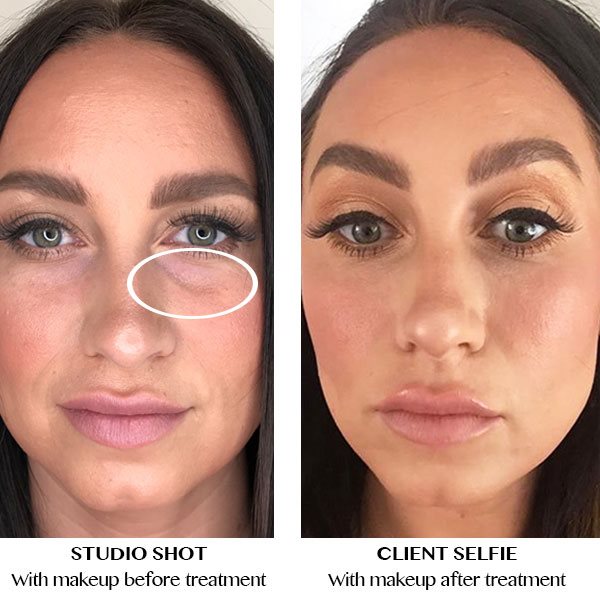
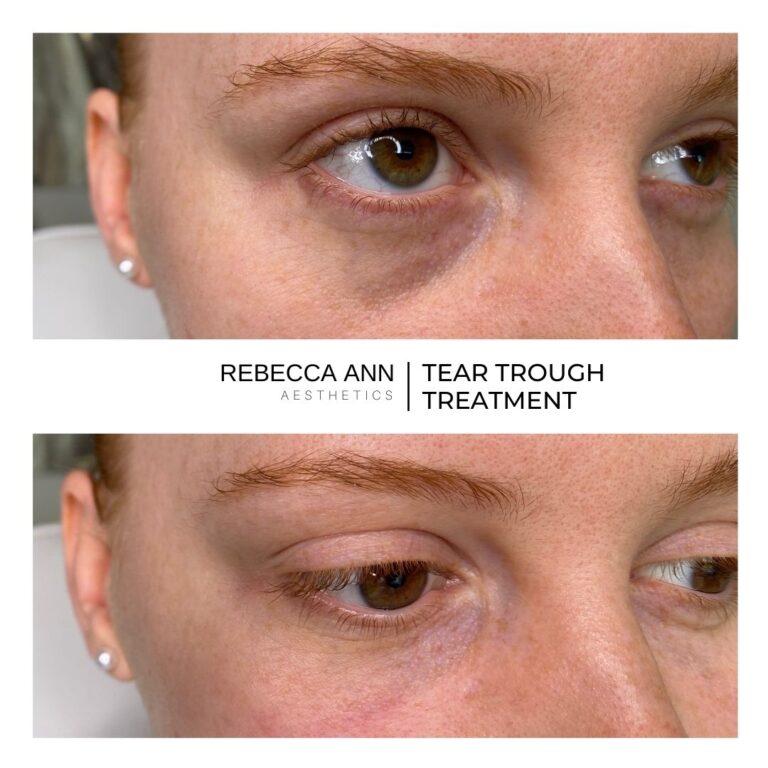
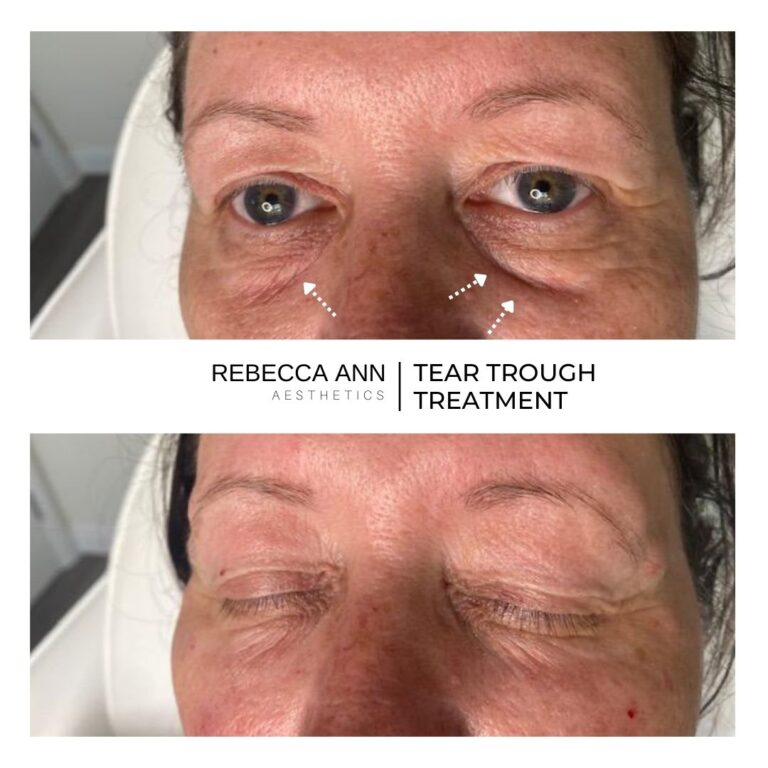
- ccTear Trough. A filler with a thinner consistency can be used to improve hollows under the eyes.
- Marionette lines (downturned lines at the corners of the lips)
- Jawline. To improve a jawline lacking definition.
- Temples. This is a lesser known treatment area for fillers but can really improve temporal hollows and provide an effective lift in the midface/eye area.
- Eyebrows. To aid in lifting the brows for a more youthful and refreshed appearance.
- Nose reshaping. Also called a Liquid Rhinoplasty to improve the side profile for beautification.
How long does filler last?
This really depends on the type of filler, the person receiving the filler and the area of product placement. Hyaluronic acid is the most popular filler used. This substance exists naturally in the skin. The gel-like material typically lasts anywhere from 6-12 months or longer. (Although 3-9 months in the lips). The material gradually breaks down and the body naturally absorbs the particles.
Factors affecting the longevity of dermal filler can include:
- metabolism
- exercise
- smoking
Are there different types of filler?
There are a few types of filler on the market such as collagen filler, hyaluronic acid filler, fat injections and more permanent fillers. Hyaluronic acid fillers are not permanent and have no lasting effects, providing the most natural results. They are the most popular fillers and are considered to be safer. There are also several types and brands of hyaluronic acid filler.
How much does filler cost?
The cost of dermal filler really depends where and who you go to for your treatment. Prices and price structures can vary. Many practitioners charge per syringe but you may also find fillers charged per area treated.
Which brand of filler is best?
Hyaluronic Acid fillers are not permanent and have no lasting effects, providing the most natural results. Most medical practitioners stick to one brand such as Restylane, Juvederm or Teosyal. The patient will be in good hands with these brands as they offer a variety of different fillers with varying densities, molecule size and hyaluronic acid concentration as well as many year’s worth of medical research behind them to ensure their safety.
There are over 200 brands of dermal fillers on the market and with increasing demand in aesthetic medicine new brands are emerging. However, these are released rapidly onto the market and we must question whether these have undergone any proper medical testing and inspection. There can also be imitation products.
If you come across cheap offers for fillers that are not coming from a medical professional, then it is likely that you’re dealing with brands that are not of the highest quality, or imitation products bought online.
What is filler made from and is it safe?
Fillers are made from Hyaluronic Acid. This is a natural component in our skin which has the ability to attract up to 1000 times its own weight in water. It’s main task is to hydrate the skin as well as reinforce collagen and restore elasticity. The body will metabolise the hyaluronic acid gel and in time it will gradually wear off.
Because hyaluronic acid is a natural component, it is considered to be safe. In fact, it is safer than the older forms of permanent or collagen filler. Of course, there are side effects as with any injectable treatment. The most common side effects include swelling and bruising which normally subside in a couple of days.
How much filler do you need for different areas?
What is the difference in results between 0.5ml and 1ml lip filler?
This depends on the type of filler used and the effect to be achieved. Results can also vary from person to person. 1ml on one person will look entirely different to another person who has had the same 1ml.
In terms of liquid volume, to give you an idea, 0.5ml is 1/10 of a teaspoon. See the below image as a guide.
Is having filler painful?
Which method of injecting is best, cannula or needle?
Traditionally, dermal fillers have been administered to the face via a needle. One of the main issues with needles is the likelihood of swelling and bruising post-treatment. Once the needle is inserted there is a chance that it will pierce the blood vessels underneath the skin, resulting in a bruise. Whilst medical practitioners can take various measures and use their knowledge of facial anatomy to minimize the risk of bruising, even the most experienced of practitioners can’t guarantee that a patient definitely won’t bruise.
In contrast, a cannula does not pose the same risks due to its blunt tip. Whilst a small needle is used to make the initial entry point, once the cannula is inserted into the skin, it is less likely to pass through the blood vessels. Instead, it simply pushes past the vessels causing less trauma underneath the skin and therefore less chance of bruising post-treatment.
A cannula is significantly longer than a needle and is more flexible, allowing for smoother, continuous delivery of filler in areas such as the jawline. While many practitioners see the flexibility and length of a cannula as an advantage, some also see it as a disadvantage. A small needle often allows for more control and accuracy, especially in areas that require a great deal of precision. Ultimately, there are benefits to both methods.
Can lip filler correct asymmetry?
When shouldn’t I have filler?
There are certain contraindications to having filler:
- Pregnancy and breastfeeding – There are no studies evaluating the safety of fillers in women who are pregnant or breastfeeding, therefore those women should avoid fillers. It’s better to be safe than sorry in this instance.
- Viral, bacterial or fungal infections at the site of injection – If you have any active infections you’ll need to avoid filler in these areas.
- Allergies to any of the substances in fillers – Some dermal fillers contain lidocaine which some people may be allergic to.
What happens during a consultation?
A consultation is the best place to start when considering any type of aesthetic treatment. A dermal filler consultation is a thorough discussion with a medical professional who will take the time to analyse your skin/face/treatment area, go through your medical history and discuss your desired results. After your consultation you should feel confident and well informed about your treatment.
What happens after my treatment?
How do I choose a practitioner?
It is recommended that aesthetic injectable procedures should be performed by medical professionals such as nurses, doctors and dentists. It is always good to ask who will be performing the treatment, how much experience they have and how many of the particular procedures they have carried out. Ask what type of fillers they will be using, whether permanent or temporary so you are able to make an informed choice. Temporary fillers are thought to be safer and the results more stable.
Read their reviews to see what others have said about their personal experiences with the same procedure.
Ask to see their before and after photos. (See if the after photo shows the kind of result you’re aiming for.) If there is little or no evidence of their work then that might be a sign the individual providing the injections doesn’t have much experience.
Ask what qualifications they have. Are they a prescriber? Are they able to manage and treat a complication should it occur? Will they be contactable after your procedure is done and able to review you should you need it?
It is important to feel comfortable with whoever you choose to do your treatment so research is vital.
What should I consider before having fillers?
Who is the person that will be carrying out your treatment? How experienced are they and what qualifications do they have?
Are you suitable for the treatment and are there any pre or post treatment instructions?
How can people offer cheap lip fillers?
You may likely come across cheap offers for fillers not coming from a medical professional. In this instance you’re likely dealing with brands that are not of the highest quality or copies purchased online which is a dangerous practice.
Also, you may get some practitioners offering discounts or doing treatments at very low prices… if it looks too good to be true, it probably is.
Remember, with aesthetics the price you pay is usually based on these three main areas.
- Cost of product
- Experience of practitioner
- Patient results
Are there any questions I should ask during my consultation?
A consultation is the most important part of any aesthetic treatment. It is your chance to ask questions, and gain as much information as possible so you can make an informed decision. Ask about the practitioner’s qualifications, experience, the number of procedures they’ve performed. Is this their only job or are they just doing a bit of aesthetics on the side?
Try to ask what kind of result you can expect following the treatment and what the pre and post treatment instructions are.
What results should I expect?
How are lip filler/fillers charged?
How can I avoid the dreaded duck look?
Why do I not get the same result as people who have the same amount of filler?
How long does the treatment take?
What our Clients are Saying
-
I was nervous but Rebecca made me feel so relaxed. My cheeks look lifted and I’ve had so many compliments already!
Hannah R.
-
Really subtle and natural, just what I wanted! My lips look fuller but not fake at all. I love them
Zara I.
-
first time doing fillers and honestly it was way less scary than i thought. bit of swelling for a day but now it looks fab!
Ellie M.
-
I was nervous but Rebecca made me feel so relaxed. My cheeks look lifted and I’ve had so many compliments already!
Hannah R.
-
Really subtle and natural, just what I wanted! My lips look fuller but not fake at all. I love them
Zara I.
-
first time doing fillers and honestly it was way less scary than i thought. bit of swelling for a day but now it looks fab!
Ellie M.
-
I was nervous but Rebecca made me feel so relaxed. My cheeks look lifted and I’ve had so many compliments already!
Hannah R.
-
Really subtle and natural, just what I wanted! My lips look fuller but not fake at all. I love them
Zara I.
-
first time doing fillers and honestly it was way less scary than i thought. bit of swelling for a day but now it looks fab!
Ellie M.
-
I was nervous but Rebecca made me feel so relaxed. My cheeks look lifted and I’ve had so many compliments already!
Hannah R.
-
Really subtle and natural, just what I wanted! My lips look fuller but not fake at all. I love them
Zara I.
-
first time doing fillers and honestly it was way less scary than i thought. bit of swelling for a day but now it looks fab!
Ellie M.
-
I was nervous but Rebecca made me feel so relaxed. My cheeks look lifted and I’ve had so many compliments already!
Hannah R.
-
Really subtle and natural, just what I wanted! My lips look fuller but not fake at all. I love them
Zara I.
-
first time doing fillers and honestly it was way less scary than i thought. bit of swelling for a day but now it looks fab!
Ellie M.
-
I was nervous but Rebecca made me feel so relaxed. My cheeks look lifted and I’ve had so many compliments already!
Hannah R.
-
Really subtle and natural, just what I wanted! My lips look fuller but not fake at all. I love them
Zara I.
-
first time doing fillers and honestly it was way less scary than i thought. bit of swelling for a day but now it looks fab!
Ellie M.

Professional Aesthetic Nurse
Rebecca (founder of Rebecca Ann Aesthetics) is a Registered Nurse with 25+ years experience, 18 of those as a Harley Street trained Aesthetic Nurse. She uses her considerable experience to offer you a personalised and professional service you can be confident in.